
Digital marketing vs traditional marketing: which works better?
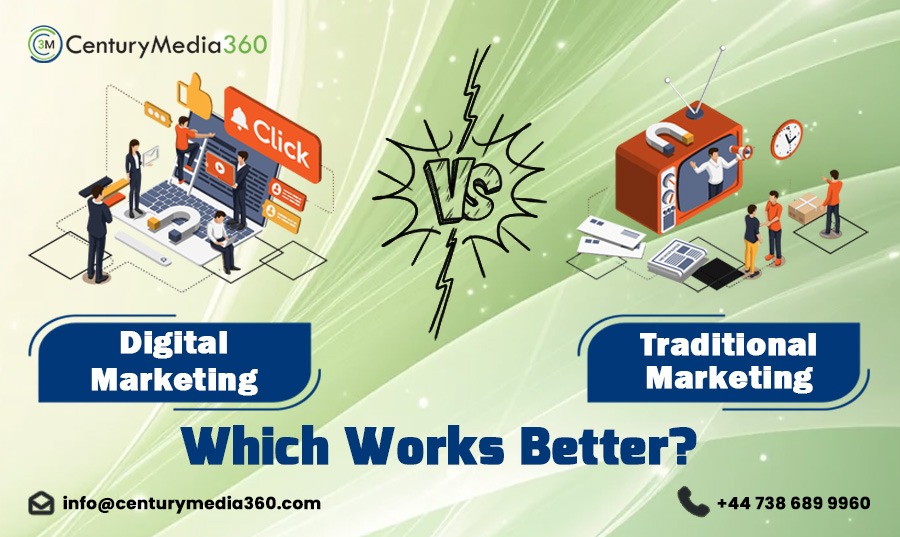
Many businesses today face a clear choice. They wonder how to reach customers best. Digital Marketing offers new ways through online channels. Traditional methods still hold value in some cases. Both have strengths and weaknesses. The right pick depends on goals, audience, and budget. No single approach wins every time.
Key Differences in Reach and Cost
Traditional marketing uses TV, radio, newspapers, and billboards. It sends messages to a wide audience at once. This creates broad awareness in local areas. The drawback is that it is very costly for production and placement. Small businesses may struggle with the high expenses.
Digital Marketing spreads messages across search engines, social media, email, and websites. It reaches people around the world without limits. Costs stay lower and more flexible. You pay only for what works in many cases. This makes it easier for startups to compete.
Advantages of Digital Marketing
Digital Marketing stands out for its precise targeting. Businesses can focus on age, interests, location, or past behavior. For getting fast results, you can use Google Analytics. You see clicks, views, and sales right away. Campaigns adjust quickly if something underperforms.
Interaction feels natural online. Customers comment, share, or message back. Videos or social media posts can be effective even after launch. Due to these advantages, many companies now spend more on digital marketing.
Advantages of Traditional Marketing
People often view print ads or TV spots as more credible. Physical materials like brochures last longer and feel tangible. They work well for older customers who spend less time online.
However, measuring success remains hard. You guess how many saw a billboard or heard a radio ad. Big changes require time. You also need to spend a huge amount of money to implement the change. You have to rely on surveys or sales-related data for feedback.
Digital Marketing vs Traditional Marketing: Which One Works Better?
The answer is rarely one or the other alone. Many successful brands mix both approaches. They rely heavily on traditional methods. They then supplement with Digital Marketing for tracking and personal connection. Digital will likely be the primary source used to reach younger audiences or generate online sales. Some local shops will still require traditional distribution channels. Digital Marketing is experiencing tremendous growth as a large percentage of people are connected via the internet today more than ever before. However, traditional marketing has a human touch that a screen cannot give. Smart companies typically test both and monitor what produces the best results. They then adjust according to their customers’ needs and business objectives. Ultimately, having a deep understanding of your audience will lead to success. Digital Marketing is an excellent set of tools that will work well in today’s world. When utilized appropriately in conjunction with traditional methods, this combination of both will provide the optimal outcome to further increase business growth.
